How to Start an Online Casino in 2026: A Complete Step-by-Step Guide
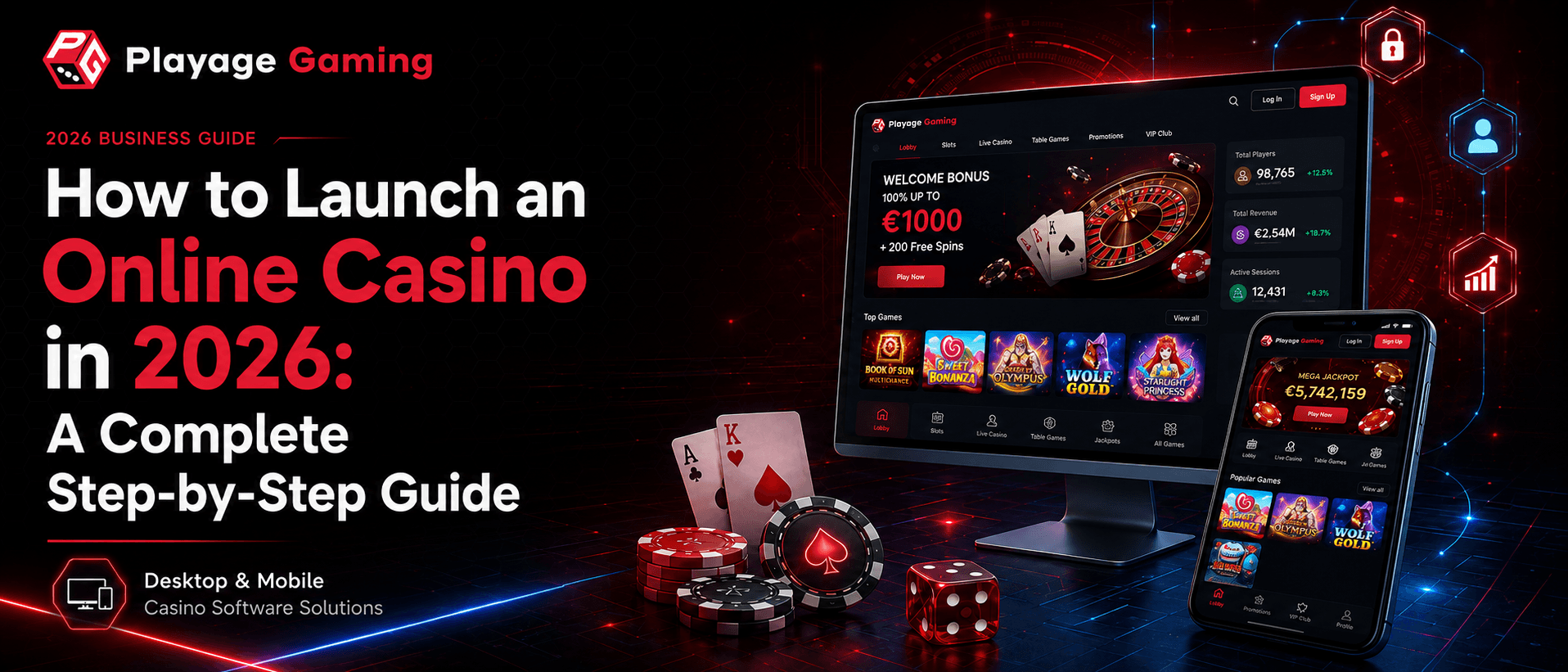
As of 2025, the gross gaming revenue of the global online gambling market has been valued around $87.69 billion to $120 billion by multiple sources. In 2026, it is projected to surpass $120 to $143.7 billion by multiple sources.
This is equivalent to a growth rate of around 10 to 11 percent per year. According to the current statistics, the industry has grown by over 100% since 2019, when the global revenue was around $45.7 to $53.7 billion dollars.
But, in 2026, starting an online casino is not the same as starting one five years ago. Nowadays, regulations are stricter. Expectations of technology are higher. The cost of player acquisition has increased. And most importantly the competition is more intense than ever.
Many operators are not failing because they have a bad idea, instead they fail because they don't take the necessary steps or they underestimate how complicated things they are building.
They do not take the time to license properly. They select the wrong platform provider. They do not estimate the costs of their budget in starting. They are failing to achieve compliance.
This guide will take you through all the steps which you need to take to start a successful online casino in 2026.
Our topics will cover licensing, platform selection, budget, compliance, technology and market entry. At the end, you will be able to specify precisely what you want to do, in which order and for how much.
Quick Definition
- 1Choose a platform model whether you want to go with turnkey or white label.
- 2Secure a gaming license from the jurisdiction which you want to target.
- 3Integrate games from a verified provider.
- 4Set up multiple payment methods including international, local and crypto based.
Do you know that these entire process just takes around 4-8 weeks with a modern turnkey provider like Playage Gaming, which provides you with a modern turnkey casino with tools like AI chatbot and churn AI for player retention, CRM, CMS, Backend Management, Affiliate Management, Already integrated game catalog of more than 20000+ games, and more than 100+ payment providers including international, local and crypto based.
The cost comes between 40,000 euros to up to 200,000 euros upfront, which totally depends on your market and model.
Market Research and Business Planning
Define Your Target Market
Start by answering these questions:
- What countries or regions will you focus on? Are you targeting the UK, EU, Asia, Latin America or a niche market? Different country players have different preferences, regulations and acquisition costs.
- Who is your ideal player? Are you aiming for the casual players, high-value whales, sports bettors, or slot fans? Your answer to this question will shape your platform, marketing and product roadmap.
- How much are you willing to spend on acquisitions? Because player acquisition in iGaming is costly. The price of a player is between 20 to 100 euros on an average depending on the market and the efficiency of your marketing.
If you're looking at the UK, be ready to spend more. For emerging markets such as Nigeria or Brazil, Player acquisition cost is less expensive but more complicated in compliance and regulations.
Research Your Competitors
Analyze your competitors marketing strategy and audience coming from where in your target market using tools such as Semrush, Ahrefs or SimilarWeb, etc. Furthermore Look at:
- What kind of games other operators are providing?
- Which modes of payment are they providing?
- Which marketing channels are they using?
- What is the percentage of players they hold on to?
- What complaints do their players have?
This is not about copying them. Instead it's about awareness of the competitive environment which allows you to differentiate.
Create a Financial Projection
Estimate income for Year 1, Year 2, Year 3. Use conservative assumptions. Set expectations lower than what you believe you can accomplish on player acquisition. Use a churn rate of 5% to 10% per month (this is industry average).
For example, you acquire 1,000 players in one month, and each player is acquired at a cost of 50 euros, so your CAC (customer acquisition cost) is 50,000 euros.
Now assume that each player at an average is putting down 100 euros, and 2 percent rake, your month one revenue is going to come to 2,000 euros. It will take you 25 months to break even.
This is important because this will shape your overall strategy. If you can't break even in 18 months, you must change your model before you begin!
Choose Your Platform Model
There are two primary options : turnkey and white label
What Is a Turnkey Casino Platform?
A turnkey casino solution is one that provides you with complete ownership of the platform, your casino license, player data and all revenue. This means you retain the entire amount of all your gross winnings, with payment processing fees and optional license fees (0-5%) deducted.
- You are the owner of the platform code.
- The player database belongs to you.
- Which games are integrated is under your control.
- You decide how you want to be able to reach your market.
- You can add a sportsbook, a poker room or any other vertical you wish to add.
Turnkey requires a longer launch period (4-6 weeks) and is more expensive initially (30,000-200,000 euros). However, you create a true business asset that is owned and can be sold or grown.
If you want to find out more about how turnkey works, check out our comprehensive guide What Is a Turnkey Casino Solution? A Beginner's Guide.
What Is a White Label Casino Platform?
A white label casino is usually run using a provider's gaming license. You are required to pay a percentage of your gross gaming income to the provider which ranges from 15 to 40 percent, and it is paid on an ongoing basis. You do not own anything apart from your brand name.
White label launches take between 1 to 2 weeks of time and cost between 10,000 to 40,000 euros at the start. However, there are many hidden costs which white label providers hide at first. Some hidden costs are: locked capital for rolling reserves; geographic restrictions; custom features not permitted; and 50,000 to 100,000 euros in switching costs if you ever decide to migrate.
However, there are many hidden costs which white label providers hide at first. Some hidden costs are: locked capital for rolling reserves; geographic restrictions; custom features not permitted; and 50,000 to 100,000 euros in switching costs if you ever decide to start your own turnkey solution or create from scratch.
To get a detailed comparison of both models and 2026 cost data, read: Turnkey vs White Label Casino: What's the Difference? (2026 Guide).
Which Model Should You Choose?
Choose turnkey if:
- You have a budget of at least 40,000 euros or more.
- You want to continue at least for more than two years.
- You wish to provide a service to Tier-1 markets (UK, Malta, Isle of Man).
- You want to have your player data.
- You are looking to add several verticals (casino + sportsbook).
Select white label when:
- You have a budget of less than 20,000 to 30,000 euros.
- You are trying to experiment with a new market.
- You are looking to start within a month.
- You're fine with paying 15–40 percent revenue share forever.
Turnkey is the better choice for most of the ones out there that are trying to actually create a real business. The long term cost is significantly less expensive, and you are the owner of the business that you are creating.
Secure Your Gaming License
Why You Need a Gaming License
The difference between a legitimate and illegal gaming operator is a gaming license. It gives you legal protection for your operations and credibility with your players. It also enables payment processors to collaborate with you and allows you to advertise legally in some jurisdictions.
The Major Licensing Jurisdictions in 2026
Malta Gaming Authority (MGA)
Malta is the most trusted gaming jurisdiction in Europe. Since 2001, the MGA has been issuing licenses to operators. It involves in-depth due diligence and rigorous compliance standards with active enforcement against violators.
- High credibility with players
- Access to EU markets
- Strong enforcement
- High compliance costs
- Costly ongoing audits
UK Gambling Commission (UKGC)
The UK market is the world's largest regulated iGaming market. With a UKGC license, you have direct access to 40 million players in the United Kingdom.
- Largest regulated market
- Highest protections for players
- Strong brand value
- Most costly to maintain
- Complex compliance requirements
- 21 percent gaming duty on out-of-state games going up to 40 percent by 2026
Curaçao Gaming Authority
Curaçao implemented a redesign of the current licensing system in 2024. It has now become a moderately regulated jurisdiction, with lower costs and a faster approval time compared to Malta or the UK.
- Fast approval
- No gaming tax
- Worldwide market access
- Reduced compliance burden
- More flexible rules
- Newer regulator (late 2024)
- Less enforcement history
Isle of Man
Isle of Man provides a middle-ground between cost and credibility. It is especially favored by operators looking at Europe and the UK.
- Fast approval compared to MGA
- Strong regulatory reputation
- Access to EU and UK markets
- The application process is complex
- Ongoing costs are moderate
Which Jurisdiction Should You Choose?
| Jurisdiction | Best For | Cost | Timeline |
|---|---|---|---|
| Malta (MGA) | Targeting EU and international players | €5,000 to €600,000 per year | 6-12 months |
| UKGC | Targeting UK players specifically | £4,000 to £800,000+ per year | 12-18 months |
| Curaçao | Fast launch with global reach | €47,450 per year | 3-6 months |
| Isle of Man | EU and UK access with lower costs | €5,000 to €53,000 per year | 6-12 months |
A majority of operators that are launching in 2026 opt for Malta or Curaçao. Malta is the more costly option but is more credible. Curaçao is more speedy and less expensive but newer.
A turnkey solution gives you complete flexibility for your licensing approach.
Note: When it comes to white label casinos, it's not you who determines the jurisdiction. The provider does. One of the hidden constraints of white labels. Your provider's geography restrictions apply and you can't access jurisdictions beyond their license.
Choose the Right Platform Provider
What to Look For in a Platform Provider
Games and Content
In 2026 you will need at least 5-10k games to be competitive with other platforms. The best platforms provide at least 20,000+ games from more than 100+ verified game providers. This comprises slots, live casino, table games, crash games, and instant-win titles.
- How many games do you incorporate?
- Who are the providers you work with?
- Is there a way to add new providers on their own?
- How often do you add new titles?
Payment Methods
Mobile users want to have immediate and smooth payment experience. Your platform should have at least 50-100 different payment options. This involves credit cards, e-wallets, bank transfers and even local payment methods and crypto.
In 2026, crypto payments are a must. Because a large part of the players, especially located in Asia and Latin America, expects to see bitcoin, ethereum, and stablecoins such as USDT, USDC.
There should be at least 100 payment options that are already supported by a modern platform. This is important because the availability of payment methods can directly affect conversions.
Back Office and Tools
You need to have full-fledged back office tools for your platform. In order to segment and target players, one must have customer relationship management (CRM). You need a content management solution (CMS) that you can use to update your website.
In order to manage partners, you must have affiliate tools. To make your data meaningful, you need business analytics.
Moreover, AI-powered features for player retention are essential. By 2026, being able to forecast churn with AI predictions 7-14 days ahead, and automatically adjusting bonuses, is table stakes.
Compliance Infrastructure
Your platform should have inbuilt compliance tools. This includes know your customer (KYC) verification, anti-money laundering (AML) screening, responsible gambling controls, and player protection features.
The platform must have multi-jurisdiction compliance. If you are dealing with both Malta and Curaçao, the system must apply different regulations in these two areas.
Scalability
Get a platform that will scale with you. Is it possible to add a sportsbook later? Is Live Casino also possible to add? Is it possible to grow into new markets without having to rebuild the platform?
Check for the platforms that have a clear roadmap for further verticals and features.
What Playage Gaming Offers
You can explore our turnkey casino platform page to know more about the features.
To get a detailed view of the game library, go to the game library page.
For more information on payment infrastructure, please view the payment methods page.
Integrate Games and Content
After selecting your platform, the next step is to integrate your games. This is not as complicated as it may seem.
100+ game providers are already integrated into your platform by your provider. You are responsible for deciding which games should be prominently displayed on your home page.
In 2026, successful operators focus on:
Variety. Include slots, live casino, table games, crash games and instant wins. Because different players enjoy playing different games. Slots drive volume. Live Casino attracts the big spenders. Crash games are where younger people are drawn to.
Localisation. Games vary in popularity depending on the market. In the UK, branded slots based on popular TV shows are a favorite choice among players. Live baccarat is preferred among Asian players. African players are highly involved in casino games integrated with sports betting.
You should be able to include games by market from your platform provider. For example, when launching in two countries, such as the UK and Malta, it is important to include different games for the two countries.
Fresh Content. Players want new games on a regular basis. Your platform should have at least 10-50 new games added to it every month. This helps lower player churn and keep players engaged.
To explore Playage Gaming's game library, visit: Game Library Page.
Set Up Payment Methods
The following payment methods will be required for 2026.
Credit and Debit Cards
This is the most widely used payment option. You should at least support Visa and Mastercard. Add 3D Secure for security.
E-Wallets
E-wallets such as PayPal, Skrill, Neteller, and local e-wallets. These account for 30 to 40 percent of deposits across Europe and Asia.
Bank Transfers
Some players choose direct bank payments for depositing and crediting back to their account. This is common in Germany and the Nordics.
Crypto
Cryptocurrencies like Bitcoin, Ethereum, USDT, and so on are now crucial. From 5% to 15% of tech-savvy gamers are crypto players. This number has been increasing fast.
Local Payment Methods
Local preferences exist for each market. India has UPI. In southeast Asia local wallets exist like promptpay, duitnow. In Europe there are paysafe group, trustly, All of them should be supported by your platform.
There's a big difference between providing 50 payment options and providing 200 payment options. It gives an additional 10-20 percent conversion level.
You can view the entire payment system Playage Gaming provides at the Payment Methods page.
Build Your Back Office and Tools
Essential Back Office Components
Customer Relationship Management (CRM)
Your CRM is where you segment players, offer promotion to them and track your retention. Modern CRM automatically adjusts offers, based on player behavior data.
In 2026, Modern CRM is helping improve retention by 15 to 25 percent, compared to manual methods.
Check out our CRM module page to know how our CRM can help you.
Content Management System (CMS)
Your CMS is the tool that helps you update your website banners and colors, add new promotions, and manage marketing content without the help of any developer.
Have a look at our CMS panel page to get to know how it can help you.
Affiliate and Partner Management
74% of online casino operators use affiliate marketing as a key acquisition channel in 2026. You must have the tools to recruit, track and pay your affiliates.
Explore the affiliate module page to learn more about the partner management offered on the platform.
Business Analytics
You need to have the visibility of your platform’s key metrics in real-time, such as the number of new player registrations, deposit conversion rate, average bet size, churn rate, lifetime value, and return on ad spend.
Compliance and Reporting
Regulatory reporting, player protection requirements and audit trails are all a requirement for your back office.
For a comprehensive look at the back office tools, visit: Backend Panel Page.
AI Tools for Player Retention
The operators who will win in 2026 are the ones who will make effective use of AI. Specifically:
Churn prediction which helps you spot players that may be on the verge of leaving your casino 7-14 days ahead of time. Once you know then you can target bonuses to re-engage with them.
LVO Lifetime Value Optimization utilizes player behavior which helps you determine which segments of your players are most profitable and target your marketing efforts accordingly.
Personalized recommendations offer tailored gameplay suggestions based on a player's past activity, enhancing engagement and time spent on the platform.
Playage Gaming features native AI Chat and Churn AI tools as a standard feature.
Implement Compliance and Responsible Gambling
Core Compliance Requirements
Know Your Customer (KYC)
Each player's identity will need to be verified before they can withdraw funds. In 2026, this means:
- Document verification (Passport/ID card scan)
- Address verification (utility or bank statement)
- Age verification - at least 18 years old or at least 21 years old in some jurisdictions
Advanced platforms feature biometric verification and liveness detection to avoid fraud.
Responsible Gambling Controls
Your platform should have the ability to let players:
- Set deposit limits
- Set time limits
- Self-exclude from playing
- Seek assistance for problem gambling
In the UK, affordability checks are required. If a player is playing more than they can afford, you need to step in and restrict their playing.
Anti-Money Laundering (AML)
Every player should be checked against sanctions lists and politically exposed person (PEP) lists. Suspicious transactions need to be monitored. When required, suspicious activity reports must be submitted to your regulator.
Data Protection
The player data should be encrypted. Access must be logged. Regulators should be notified of breaches within 72 hours.
Licensing Jurisdiction Requirements
Compliance requirements vary by jurisdiction. Malta, the UK, and Curaçao all have different rules.
Your platform provider should handle multi-jurisdiction compliance out of the box. If they do not, you will have to build this yourself, which is expensive and error-prone.
Plan Your Player Acquisition Strategy
- Search Engine Optimization (SEO)Create content and pages that rank for keywords like 'best online casino' or 'live casino with crypto' or 'online sports betting'. Create optimized landing pages, blog posts, guides, and comparison content.
- Social MediaMany players spend most of the time on Facebook, Instagram, TikTok, and Youtube. Develop a content plan that engages your audience and gets you to the new audience as well.
- Content and InfluencersIn 2026, iGaming reached over 400 million dollars in influencer marketing deal volume. Working with creators with audiences in your target market can lead to substantial player acquisition.
- Affiliate MarketingMore than 74% of iGaming operators depend on affiliate marketing. Every player which comes from affiliate you have to pay a commission of 25 to 50 percent of player revenue to affiliate.Quality affiliate networks like Scaleo, Revglue, and Direct Affiliate provide access to thousands of publishers.Visit the affiliate module page to see how to manage this.
- Paid AdvertisingGoogle Ads, Facebook Ads and TikTok Ads do work, but they are costly. The cost per acquisition ranges between 30 to 100 euros, depending on your market and targeting.
- Native Advertising and Sponsored ContentiGaming advertising is taken by premium publisher networks. Cost per click is cheaper than Google Ads but not as precise in targeting.
Launch and Optimize
Pre-Launch Checklist
- Is every page and game working?
- Is the checkout process smooth and fast?
- Do all payment methods work properly?
- Are all games loading correctly?
- Is the mobile experience perfect?
- Do compliance features work properly?
Launch with a small group of test players first. Ask them for feedback. Fix issues. Then expand gradually.
Post-Launch Optimization
Monitor these metrics obsessively:
- Cost for acquiring a new player
- Deposit conversion rate
- Average deposit size
- Churn rate
- Lifetime value of a player
- How much you are spending on ad, and what you are getting back
There are levers you can pull with each of these metrics. Like by increasing your deposit conversion rate by 5 percent, you can double your profitability.
2026 iGaming Trends You Must Know
Mobile-First is Non-Negotiable
71.7% of all iGaming activity globally is now done on mobiles or tablets. Mobile-first design is not an optional feature any more, it is an important feature.v
Your site needs to be super-fast on the mobile. Any loading time of more than three seconds marks a negative impact on your user. And that is why native apps are better than mobile web.
Crypto Adoption is Accelerating
Crypto gambling has already surpassed 70 billion dollars and continues to increase by 25-30 percent each year. Bitcoin, Ethereum and stablecoins like USDT, USDC now have become the expected payment methods players love to see.
If the operator provides crypto payment options, then there is a 10 to 20 percent increase in conversion rates.
AI and Personalization Are Table Stakes
Modern operators are now expecting machine learning models that predict churn, suggest games and optimise bonuses.
Live Casino Keeps Growing
More than 20 percent of online casino revenue comes from live dealer games. You need to invest in live streaming infrastructure and dealers.
Emerging Markets Matter
The regulated market in Brazil started in 2024 and its size was gigantic from the beginning. Next up is probably India. Africa is following. While you may be just aiming for Europe and the UK, you're missing out on a lot of potential growth.
Complete 3-Year Cost Breakdown
| Cost Item | Year 1 | Year 2 | Year 3 | Total |
|---|---|---|---|---|
| Platform setup (turnkey) | 40,000 | 0 | 0 | 40,000 |
| Gaming license | 10,000 | 10,000 | 10,000 | 30,000 |
| Compliance and audit | 15,000 | 15,000 | 15,000 | 45,000 |
| Player acquisition | 150,000 (depends on you) | 200,000 (depends on you) | 250,000 (depends on you) | 600,000 (depends on you) |
| Team (1-2 staff) | 80,000 (depends on you) | 100,000 (depends on you) | 120,000 (depends on you) | 300,000 (depends on you) |
| Payment processing fees (2% of GGR) | 20,000 (depends on your monthly revenue) | 40,000 (depends on your monthly revenue) | 60,000 (depends on your monthly revenue) | 120,000 (depends on your monthly revenue) |
| Hosting and infrastructure | 5,000 | 5,000 | 5,000 | 15,000 |
| Marketing and advertising | 50,000 (depends on you) | 75,000 (depends on you) | 100,000 (depends on you) | 225,000 (depends on you) |
| Total 3-Year Cost | 370,000 | 445,000 | 560,000 | 1,375,000 |
Revenue assumptions for this example:
- Year 1: 500 players acquired, average lifetime deposit 100 euros, 2% operator take = 1,000 euros monthly = 12,000 euros annual revenue
- Year 2: 1,200 players acquired, 2,000 euros monthly = 24,000 euros annual revenue
- Year 3: 2,500 players acquired, 5,000 euros monthly = 60,000 euros annual revenue
How long does it take to launch an online casino?
In the case of a modern turnkey provider, like Playage Gaming, it takes 4 to 6 weeks from contract signing to live casino. This involves platform setup, in-game integration, payment providers integration, compliance testing and more such things.
Conclusion
Starting a casino online in 2026 isn't straightforward. However, with proper planning, the right platform, and realistic expectations, it is a completely realistic goal.
The operators that are successful in 2026 are those who:
- Choose the right platform model (usually turnkey)
- Secure a credible gaming license
- Prioritize player experience and retention
- Optimize each funnel step using AI and data.
- Design for mobile first!
- Provide modern payment options such as crypto.
- Assume a 18-24 month break-even time frame
For operators planning to launch in 2026, seek a personalized quote from Playage Gaming for the turnkey platform designed specifically for these new markets.
We offer it all: 20,000+ games, 100+ payment options, AI tools, complete back office, and 0% revenue share.
If you have any questions, please reach out to us for a quote. We work with operators from pre-launch planning to full-scale operations.
Disclaimer: This article is not meant to be legal, financial, or gambling advice, but for informational purposes only. Licensing requirements vary by jurisdiction and may change from time to time. Before starting an online gambling business, always seek the advice of qualified legal and compliance experts.
Related Posts
What Is a Turnkey Casino Solution? A Beginner's Guide
A turnkey casino solution is a fully built, launch-ready online casino platform that operators can brand and configure without developing the technology themselves. It includes software, game integrations, payment systems, back-office tools, and technical infrastructure provided by the platform provider. The operator focuses on branding, licensing, and market strategy.
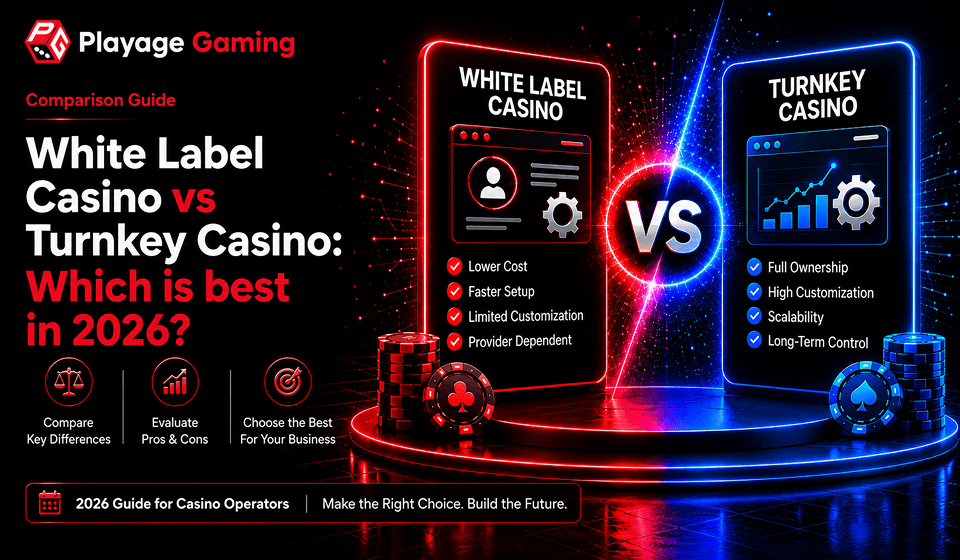
White Label Casino vs Turnkey Casino: Which is best in 2026
A white label casino platform is a fully developed online casino solution that allows you to add your brand and launch quickly under an existing infrastructure, while a turnkey casino solution is a completely pre-built, launch-ready iGaming platform where the provider handles the entire development and configuration process, giving you full ownership and control of the platform.
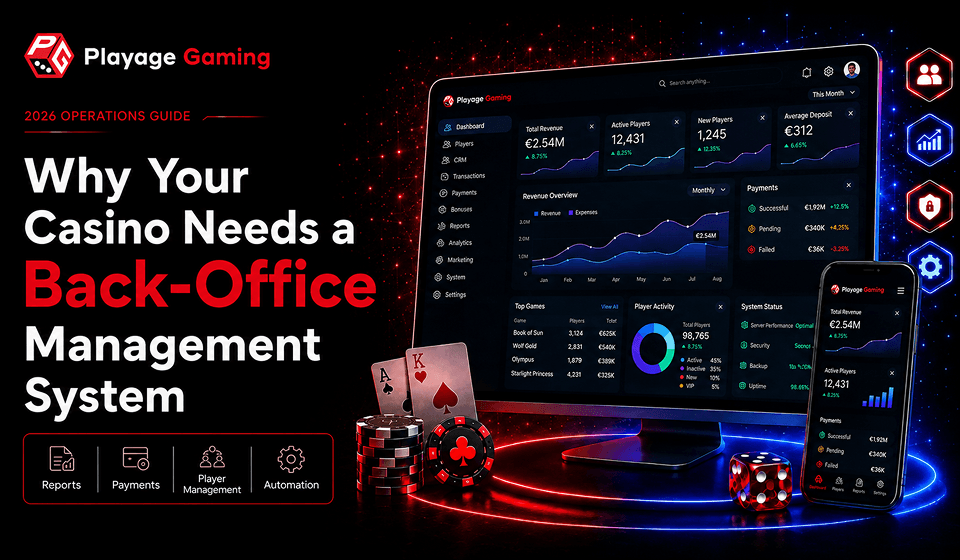
What is a Back-Office Management System and Why Does Your Casino Need One?
Understand what a casino back-office management system is, what it includes, and how it differs from the player-facing casino platform. Learn how player management, CRM, compliance, affiliates, payments, analytics, CMS, and AI tools help operators improve retention, reduce manual work, and increase revenue.